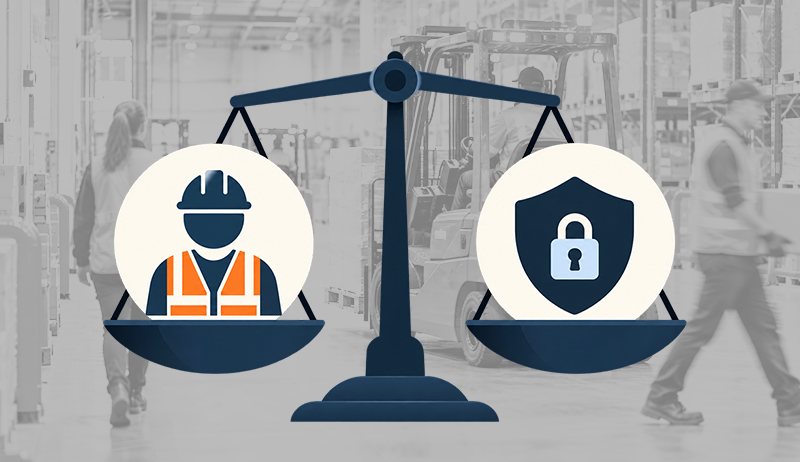
The SEEN System combines sensors, cameras, and data analytics to help organizations protect people from physical harm. But when cameras capture workplace safety events, another responsibility comes into play: protecting the privacy of the people in those images.
Images help explain how a dangerous situation arose and what needs to change. Sometimes, knowing who was involved supports individual coaching or a fair investigation.
When Knowing Who Matters
A conversation with one SEEN Insight user, who we’ll call Mike, brought home why that identification can matter. Mike knows many of the people he works with personally. When he sees someone repeatedly putting themselves at risk, he believes that knowing who is involved allows him to have a direct, meaningful conversation that could help prevent a serious incident.
For Mike, this is personal. He wants everyone he works with to get home safely. He is prepared to have difficult conversations to help make that happen, and an identifiable image can help him recognize who needs that conversation.
But what happens when we look beyond Mike? A larger organization cannot base its approach to personal information on knowing that one manager means well. It needs policies that work as people change roles, join or leave. Who should have access to the images? What can they use them for? And where are the boundaries, even when the intention is to keep someone safe?
Different Laws, Shared Responsibilities
SEEN Insight is used across countries with different privacy and workplace laws. Those laws affect what information can be captured and recorded, how it can be used, and who it can be shared with.
In some jurisdictions, including the EU and UK, we formalize these responsibilities through our Data Processing Addendum (DPA). SEEN’s DPA sets out our obligations for handling personal information on their behalf, including under:
European Union: the General Data Protection Regulation—EU GDPR.
United Kingdom: UK GDPR and the Data Protection Act 2018.
United States—California: the California Consumer Privacy Act, as amended by the California Privacy Rights Act—CCPA/CPRA.
Elsewhere, our terms of service address our responsibilities under the relevant local laws, including:
Australia: the Privacy Act 1988 and state and territory surveillance laws.
New Zealand: the Privacy Act 2020.
Canada: PIPEDA and provincial privacy laws.
United States, beyond California: applicable state privacy, workplace surveillance and biometric privacy laws.
Japan: the Act on the Protection of Personal Information—APPI I (個人情報保護法).
Whether or not a DPA applies, SEEN and its customers must comply with relevant privacy laws in the jurisdictions where they operate.
What Privacy Laws Require
Privacy laws do not generally impose a blanket ban on capturing identifiable workplace images. Instead, while requirements vary between jurisdictions, the underlying principle is similar: personal information must be collected and used for legitimate, lawful purposes, with appropriate safeguards in place.
This is where the distinction between SEEN's role in enabling the capture of identifiable images and our customers' responsibility for deciding how those images are used becomes important.
From conversations with people like Mike, we understand that knowing who is putting themselves at risk can be valuable. It allows managers to address unsafe behavior directly, potentially preventing repeated incidents and supporting lasting improvements in safety.
However, workers also have rights and legitimate concerns about workplace surveillance. Even well-intentioned systems can be misused, particularly in larger organizations where more people have access to personal information. Misuse may result from poor judgment, inadequate controls, or deliberate actions.
Finding the right balance is not always straightforward. Restricting identifiable images can reduce the risk of misuse, but it may also remove information that helps someone like Mike recognize repeated unsafe behavior and intervene before someone gets hurt.
Giving Customers more control with face blurring
SEEN Insight has recently introduced the option to blur faces in the still images that accompany records of at-risk events. With blurring enabled, users can still see where someone was in relation to the vehicle and what was happening at the time. That helps them consider whether pedestrian or driver behavior, the activity itself, or the working environment contributed to the risk.
Face blurring cannot guarantee anonymity, as someone may still be identifiable from the surrounding context. However, it can provide an additional layer of privacy protection.
The decision is not always straightforward. While blurring reduces the visibility of personal information, it may also limit opportunities for targeted safety interventions. Organizations need to consider both the privacy benefits and the potential impact on safety outcomes.
Would identifying someone enable a personal intervention that helps prevent a repeat event? What risk does retaining their identity create, and how effectively can that risk be managed?
SEEN supports these decisions by offering customers choices about how images are captured and presented, backed by appropriate contractual, security, and data protection arrangements. Our DPA and terms of service outline our responsibilities when handling personal information on behalf of customers.
Each organization must also establish its own policies governing how that information is accessed and used in the workplace.
Your organization’s policies need to establish how that information will be used in your workplace.
A shared goal, an informed decision
Start by bringing together the people responsible for safety, privacy and employment practices, along with workers and their representatives. Establish the safety goals you share, then consider what you need to learn from the images. When do you need to know who was involved? Who should have access, and what should they be allowed to do with that information? Seek advice on the legal requirements that apply to your workplace.
Those conversations may lead you to blur faces. They may establish a justified need for identifiable images, with appropriate limits on their use. Either way, the decision should be deliberate, understood and open to review.
The starting point should be a shared goal: helping prevent serious incidents, getting people home safely, and respecting the privacy and dignity of the people we're working to protect.
Find the right balance between safety and privacy for your workplace.
Talk to SEEN about how our system can support your organization's safety goals and privacy requirements.