Beyond Pedestrian Detection: Protecting Workplace Assets with the SEEN Safety System
Pedestrian safety is always the priority for forklift safety systems, and rightly so—preventing injuries is critical.
However, collisions involving heavy mobile equipment also regularly damage infrastructure, machinery, and stock across warehouses and logistics operations. Impacts with racking, doors, barriers, and fixed equipment create costly downtime, disrupt workflows, and generate ongoing repair and maintenance costs. As a result, collision prevention is increasingly viewed not only as a safety measure, but as an important way to protect physical assets and maintain operational reliability.
The Impact of Forklift Collisions with Assets
Forklifts operate in busy industrial environments with tight aisles, limited visibility, and constant vehicle and pedestrian movement. Even minor operator misjudgments can result in contact with racking, door frames, machinery, or structural elements.
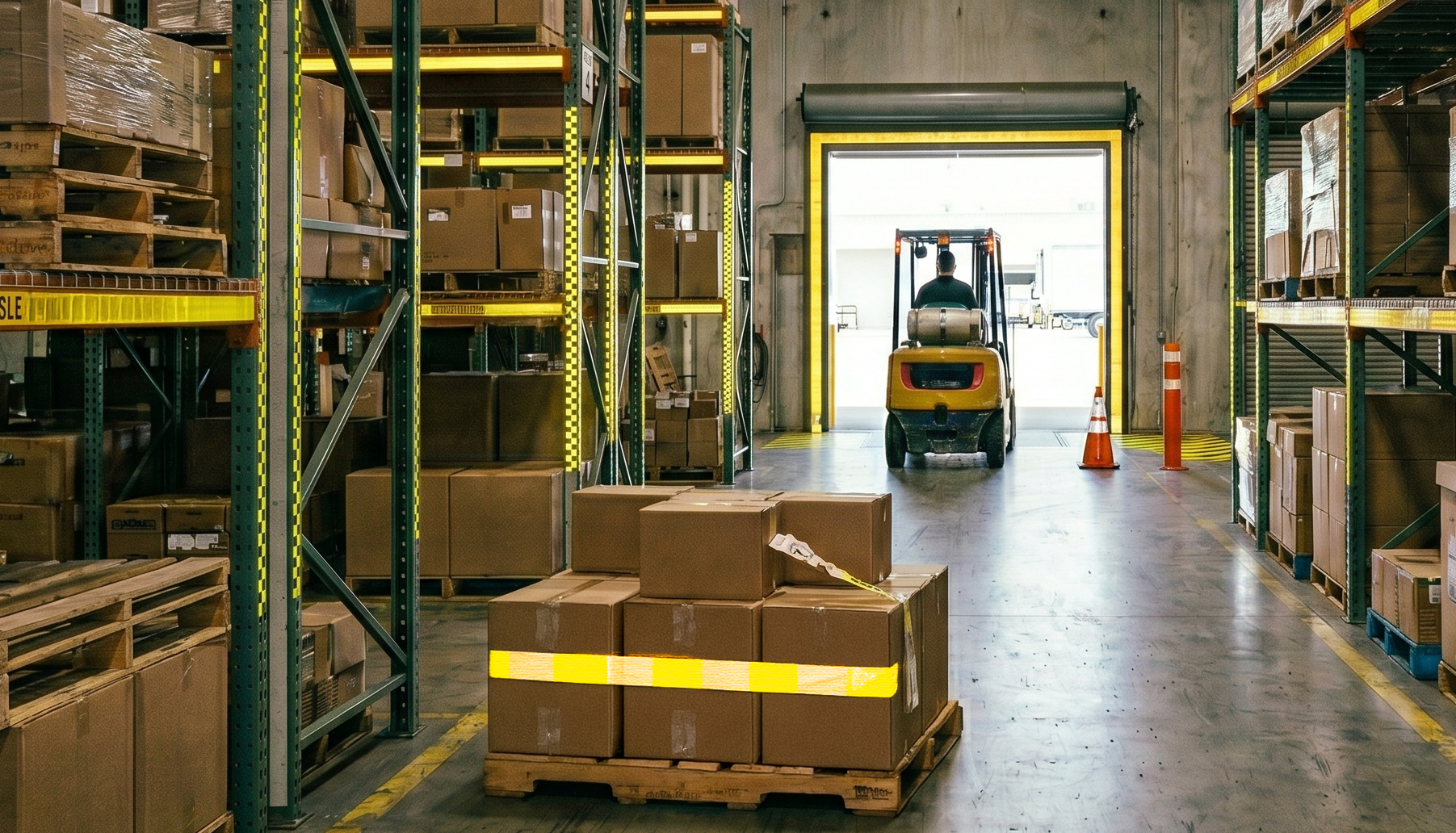
While a single impact may appear minor, repeated strikes can become highly disruptive over time. They create unplanned maintenance, interrupt material flow, delay operations, and gradually degrade critical infrastructure. In many facilities, repeated impacts with warehouse doorways and racking are treated as routine operational issues, despite the accumulated costs and productivity losses they create.
For example, a forklift repeatedly clipping a warehouse doorway may only cause minor damage each time, but over months this can lead to damaged doors, misalignment, maintenance callouts, and operational delays during repairs. Similar issues occur around production machinery, safety barriers, and loading areas where even low-speed impacts can interrupt operations and create avoidable costs.
How SEEN Detects More Than Just People
The SEEN Safety System uses laser technology to detect retroreflective material within a controlled detection zone around the machine. While the system is primarily known for detecting high-visibility PPE, the same principle can also be applied to workplace assets.
Any object marked with retroreflective material can become detectable, including other forklifts, warehouse doorways, racking, structural posts, barriers, and high-value equipment. When a marked object enters the detection zone, the system immediately triggers an audible alert, giving operators additional time to react before contact occurs.
Crucially, SEEN detects the reflective material itself rather than attempting to interpret object shapes or human forms. This enables highly controlled detection focused only on marked people or assets within the defined zone, helping reduce unnecessary alerts commonly associated with broader camera or radar-based systems.
A Practical Approach to Asset Protection
A major advantage of the SEEN system is its practicality and flexibility. It requires no electronic tags, wearable devices, or complex infrastructure to support asset detection. Existing reflective markings can often be utilized, or retroreflective tape can be applied quickly and cost-effectively to targeted risk areas.
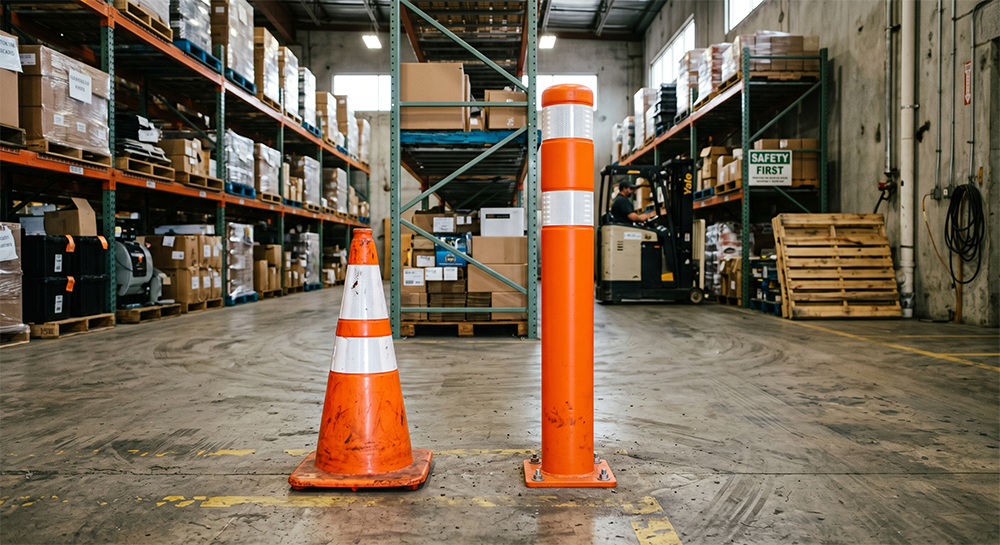
Retroreflective marking is already widely used to improve visibility in industrial environments, including on vehicles, barriers, bollards, traffic cones, loading bays, door frames, and fixed infrastructure.
This allows businesses to selectively protect the areas that matter most.
For example, a site experiencing repeated doorway impacts can apply retroreflective markings to entrance frames so approaching forklifts trigger an alert before contact occurs. Other facilities may prioritize protection around expensive production equipment, charging stations, conveyors, bollards, or structural infrastructure where even minor impacts can create costly downtime.
By focusing detection on clearly defined risk points, SEEN helps businesses improve operator awareness while supporting safer, more predictable operations.
Beyond People Protection
Pedestrian safety remains the primary goal in industrial environments. However, reducing impacts with infrastructure and equipment is also critical to maintaining safe, efficient, and reliable operations.
The SEEN Safety System supports a broader approach to collision prevention by enabling the detection of both people and marked workplace assets using the same tagless technology platform. This helps businesses protect workers, reduce avoidable infrastructure damage, and maintain the operational flow that keeps warehouses and logistics facilities running efficiently.