How Long Shifts Can Hide Risk in Your Operational Environment
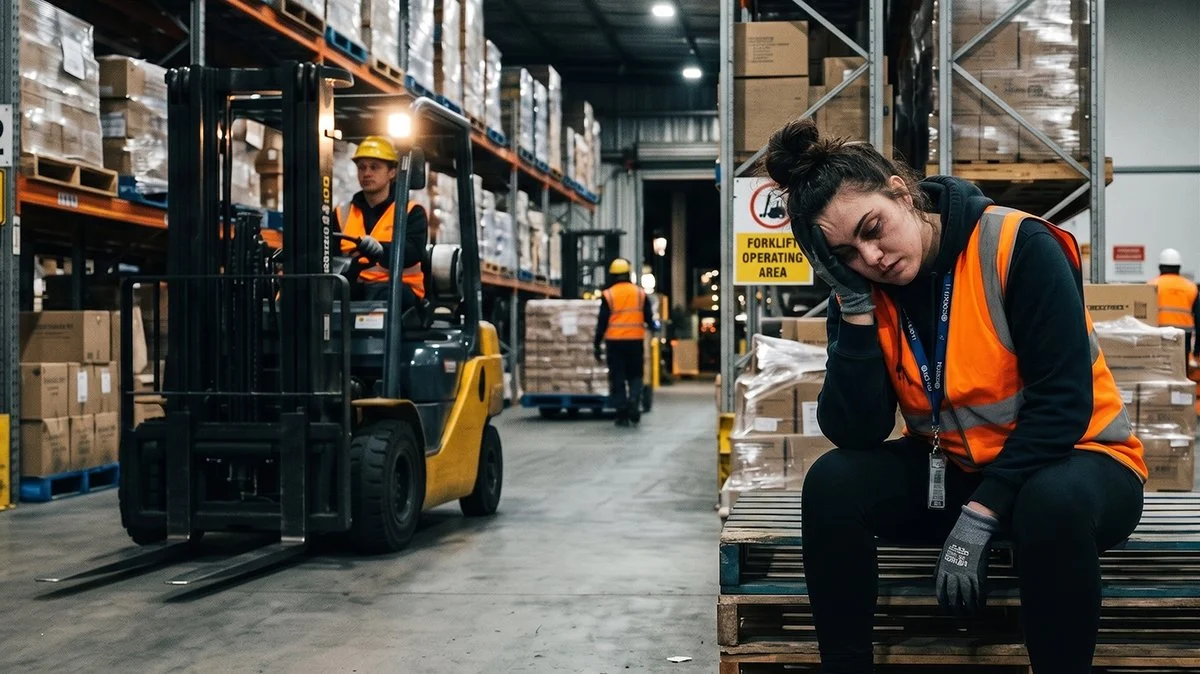
Workplace fatigue is often discussed as a wellbeing issue, but within a material handling environment it is also a significant safety issue.
When Longer Shifts Increase Risk
Forklift and mobile equipment operators make hundreds of decisions during a single shift. They continually monitor loads, pedestrian pathways, vehicle movements, and changing site conditions. As shifts become longer, concentration, situational awareness, and reaction time can decline, even among experienced operators who believe they can maintain focus in a demanding environment.
The impact is not limited to the operator behind the machine. Pedestrians working nearby are exposed to the same operating environment, and even a brief lapse in attention can affect everyone in the area.
Why Fatigue Can Be Difficult to See
Training and fatigue management procedures remain important, but fatigue is difficult to measure in real time. An operator may appear capable and focused while subtle reductions in attention are already occurring.
Fatigue-related risk can increase before there are obvious signs that an operator is losing focus.
Adding Another Layer of Protection
That is why engineering controls become an important part of a workplace safety strategy. Having a pedestrian detection system provides an additional layer of awareness around the machine and helps identify pedestrian risk events that may not be obvious to the operator at the time.
Turning Detection Data Into Fatigue Insights
The most valuable insight comes when SEEN Insight detection data is combined with basic shift information provided by the organization. By comparing detection events from SEEN Insight, organizations can use their internal data on shift length and hours worked to identify whether near misses and high-risk interactions increase during longer shifts or extended overtime periods.
By introducing SEEN Insight and its preventative data, organizations can increase the value of operator management by identifying where longer hours may be contributing to increased risk and where fatigue-management measures could have the greatest impact.
Near-miss data can help safety leaders identify whether longer shifts and overtime are contributing to increased operational risk.
Using Data to Prevent Risk Before Harm Occurs
With the implementation of the SEEN Safety Pedestrian Detection System and the significant data that accumulates from its use in an operational environment, organizations can gain greater visibility into conditions that may contribute to operator fatigue and risk.
By using this near-miss data, safety leaders can make evidence-based decisions about staffing, breaks, overtime, and operational controls before fatigue-related risk results in harm to staff or the organization as a whole.