When a Rolling Buffer Becomes the Missing Piece: A Forklift Collision Case Study
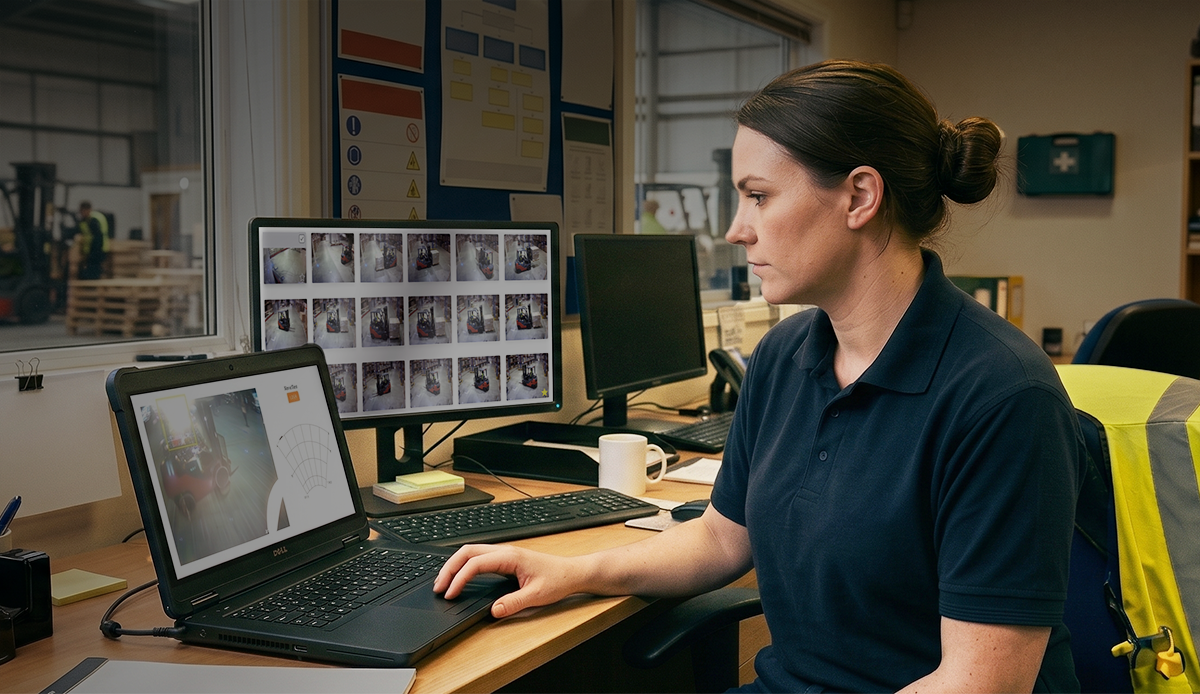
Not every safety feature is one we lead with — but sometimes the quiet ones turn out to be the most valuable.
And the benefits of the SEEN Safety system go beyond protecting people. We also help protect property.
The Feature Nobody Asks About
Every IRIS-i camera in the SEEN Safety system continuously records a rolling video buffer — roughly six hours of silent footage that's constantly being overwritten as time passes. It's separate from the sensor-triggered event recordings, which capture specific safety events as they happen and are stored until deleted by the user.
We don't make the buffer available for routine access, and that's by design. SEEN Insight is built to help understand safety events, not for general day-to-day monitoring. But in specific circumstances — like when there's a safety incident to investigate — our support team can step in to retrieve footage from that window, even if nothing triggered an automatic recording.
The Incident
One morning, a customer had a forklift-to-forklift collision in their yard. They got in touch to ask whether the SEEN Safety system on one of the machines involved might have captured anything useful.
It had.
Two things they did straight away made all the difference:
They powered down the machine quickly — which also powered off the camera, stopping the rolling buffer from being overwritten and preserving the footage.
They contacted SEEN support without delay, while the details were still fresh.
Both of these steps are covered in the SEEN Insight user guide — as standard guidance that most customers don't need to think about until the day they do.
Their yard CCTV had also caught the collision, but the footage was distant and blurry — not much help for understanding exactly what happened. What the CCTV footage did have was a time window: between 7:55am and 8:00am.
Retrieving the Footage
The next day, under controlled conditions, we powered the camera back on and remotely requested footage from that window.
In the final 20 seconds of a five-minute clip, there it was: the moment of the collision, captured from the camera's own point of view — a reversing collision with another vehicle. Fortunately, no one was injured.
Why It Helped
The extra footage didn't change the outcome, but it changed the investigation. It gave the customer's team a clear, first-person view of exactly how the collision happened — detail the CCTV alone couldn't provide — helping them understand the incident properly and identify steps to reduce the risk of a similar incident.
A Note on Reliability
It's worth being upfront: remote retrieval of buffer footage isn't guaranteed to work every time. In the vast majority of cases it goes smoothly, but there's always a small possibility it won’t. For situations where the evidence is especially sensitive or critical, we recommend sending the camera back to SEEN. Our engineering and support team can then access the internal storage and are more likely to be able to retrieve the full buffer.
Key Takeaways
The SEEN Safety system may be able to help even when there was no detection event.
Act fast if you want buffer footage preserved. Powering down the machine stops the rolling buffer from being overwritten.
Contact support as soon as possible. The buffer window is only around six hours.
Narrow down the time as best you can. Try to determine the exact time of the event from CCTV or witness accounts — this makes retrieval much quicker.
Rolling buffer footage has no sound and isn't event-triggered — but it's still there, just in case you ever need it.
For especially sensitive cases, physical retrieval is an option. Remote retrieval usually works well, but sending the camera to SEEN lets us pull the full buffer directly from its internal storage.